


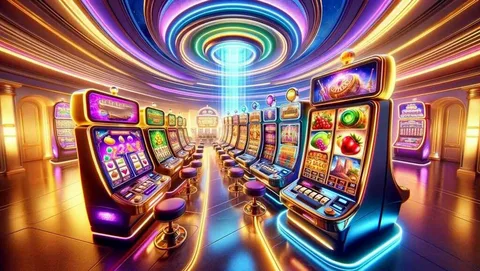
Cartoon elephants, a fairground claw machine and 25 paylines. Nearly twenty years of industry innovation has not displaced it.
Online gambling is a category defined by churn. Studios release hundreds of titles a year, lobbies reshuffle constantly, and games are designed with the assumption that attention moves on quickly.
Against that, a small number of titles simply refuse to age out. One of the clearest British examples launched in September 2006 from the studio Eyecon, later part of Playtech: a fairground-themed slot built around cartoon animals and a claw-machine bonus round, which remains among the most-played games in its category nearly two decades later.
Its survival is not sentimentality. It is a specific set of design decisions that turned out to age unusually well.
The specification
The game runs a 5×3 grid with 25 fixed paylines and a published return to player of 95.388%. Volatility sits in the medium-to-high band, and the hit rate is around 41.5% — meaning something lands on roughly two spins in five.
Two features carry the game. A pick-style bonus modelled on a fairground claw machine, where the player selects prizes from a grabber. And a free-spins round in which prizes are tripled.
By 2026 standards that is a modest feature set. There is no cascading mechanic, no expanding grid, no multiplier trail, no buy-in.
Why it lasted
The theme is genuinely distinctive. Most slot themes are interchangeable — Egypt, gems, fruit, mythology, repeated endlessly. A seaside fairground populated by soft-toy animals is not a theme anyone else was using, and distinctiveness is a durable asset in a category where most products are visually indistinguishable.
The bonus round is a real object. A claw machine is a physical thing people have used, with an understood set of expectations. That gives the feature meaning without requiring explanation, which is more than most bonus mechanics manage.
The audience was underserved. The game found a substantial following among players the sector’s harder-edged marketing was not aimed at, particularly in bingo-adjacent communities. Once established, that base proved unusually loyal.
Simplicity survived the transition to mobile. A 5×3 grid with fixed paylines and no dense interface translated cleanly to a phone screen. Games designed for desktop browsers with elaborate layouts did not.
| Specification | Detail |
| Studio | Eyecon, a Playtech company |
| Released | September 2006 |
| Layout | 5×3, 25 fixed paylines |
| RTP | 95.388% |
| Volatility | Medium–high |
| Hit rate | ~41.5% |
What the hit rate actually means
The 41.5% figure is worth pausing on, because it is the most misread statistic in the specification.
Something landing on two spins in five sounds generous. But “a hit” includes any return at all, including returns smaller than the amount staked. A game can pay on 41.5% of spins and still reduce a balance steadily, because a large share of those hits give back less than they cost.
This is why the return figure and the hit rate have to be read together rather than separately — a point that the full slot guide sets out alongside the paytable, and which the frequent-small-win pattern is specifically good at obscuring.
The audience nobody was designing for
The game’s commercial history is a useful corrective to assumptions about who plays slots.
Much of the sector’s marketing has historically been built around a young male demographic, with imagery and language borrowed from sports betting. This title found its base somewhere quite different — substantially among women, often older, frequently arriving through bingo sites rather than sportsbooks.
That audience was underserved by the industry’s dominant marketing register, and a game whose aesthetic was soft toys and a seaside fairground rather than gold bars and luxury cars had an open field. The bingo-adjacent sector became a significant distribution channel in its own right.
The commercial lesson was absorbed. A great deal of subsequent slot design targets that audience explicitly, with gentler visual language and themes drawn from domestic rather than aspirational imagery.
There is a harm-prevention point buried in this too. Gambling harm research and public messaging have both historically skewed towards the demographic the marketing addressed, which risks leaving other groups less visible in the data and less well served by support that assumes a particular profile.
The franchise problem
Longevity produced the usual commercial response: sequels, variants and re-skins, including versions built on entirely different mathematical engines.
These share the branding and the artwork while behaving completely differently. A player who knows the original and assumes a variant plays the same way is frequently wrong — return figures, volatility and maximum wins can all differ substantially between titles carrying the same name.
The practical rule is that brand familiarity says nothing about mathematics. Each version has its own specification, and the only reliable place to read it is the game’s own information screen at the casino you are actually playing at — particularly given that some studios ship multiple return configurations of the same title.
The longevity is genuinely impressive as a piece of product design, and it deserves to be recognised as such. It is also worth holding the two thoughts together: a game can be well made, distinctive, and fondly remembered, and still be a product engineered to return less than it takes. Affection for a title is not information about its terms, and the two get conflated more easily with a game people have played for twenty years than with one released last month.
A note that belongs on any piece covering this segment: operators outside British licensing are not covered by GAMSTOP and offer no British dispute route. Anyone registered with the scheme should keep that protection rather than look for ways around it. Free confidential support: BeGambleAware. 18+.
