


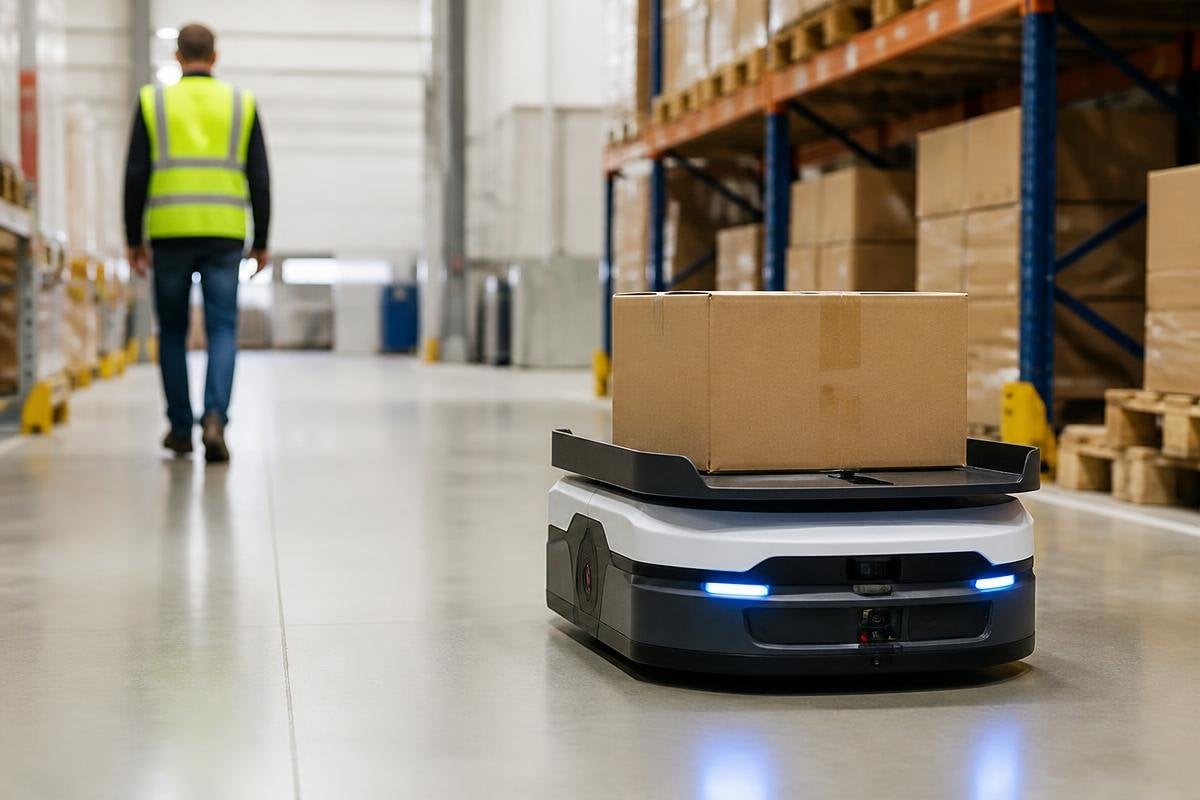
An autonomous machine can choose a route, change its speed, or stop without a person guiding each move. Existing safety laws can still apply, but they may not answer who is responsible when the machine makes a poor choice.
- The law usually follows control: duties may sit with the maker, owner, operator, or company.
- Autonomy changes the evidence: logs, software settings, sensor data, and updates can matter after an incident.
- The open gap: many rules were written for machines with clearer human control.
What safety laws already cover
Safety rules usually focus on the work being done and the risk it creates. A machine that lifts loads, drives through a warehouse, or works near people can still require guarding, risk checks, maintenance, training, and emergency stops.
Autonomy doesn’t remove those duties. A company may still need to set safe operating areas, keep people away from moving parts, check the machine before use, and train staff who work beside it. The exact duty depends on the country, workplace, machine, and task.
The hard question starts when the machine acts outside its expected path. A human operator may not have pressed a control, yet the owner may still have chosen the site, approved the software, and set the operating limits. The maker may have written the control system and supplied the sensors.
Where autonomous systems strain old rules
Traditional safety rules often assume a person can see the hazard and choose an action. An autonomous system may process sensor data, select a route, and react in milliseconds. That changes how a company must show that it planned for danger.
A written risk assessment may need more than a list of physical hazards. It may need to cover poor sensor readings, lost network links, software updates, unusual objects, blocked paths, and a person entering the robot’s work area. Each item needs a clear response, such as a safe stop or a switch to supervised control.
Software also changes the timing of responsibility. A machine can leave the factory within its stated limits, then behave differently after a model update, a new map, or a change to the work area. Records of those changes can help show what the company knew and when it knew it.
That is why evidence matters after an incident. A useful record may include the robot’s sensor inputs, control commands, software version, map, speed limit, safety-stop events, and maintenance history. Without those records, it can be hard to tell whether the fault came from the machine, its setup, or the way people used it.
Who carries the risk
A contract can divide tasks between a maker, integrator, site owner, and operator. It can’t remove duties imposed by safety law. A company may still face questions about the system it chose, the checks it ran, and the way it supervised the work.
The maker may face questions about design, warnings, software behavior, and known limits. The integrator may need to show how separate parts worked together.
The site owner may need to prove that the robot had enough room, suitable barriers, and a safe task. An operator may need to follow the work instructions and report faults.
Those roles overlap. A warehouse company may buy a mobile robot from one supplier, add its own fleet software, and change the floor layout later. Responsibility then depends on the facts, the contracts, the local law, and the records from the system.
A safety rule means little if nobody can tie it to the machine, operator, site, and date behind an incident. Robot 24 can help you find those facts in reports on autonomous machines before the next section looks at what lawmakers and companies can do now.
What lawmakers and companies can do now
New rules may help, but companies don’t need to wait for a perfect law. They can set clear limits around the machine and record the choices that affect safety.
Use this checklist before an autonomous machine works near people:
- Name the decision maker: record who approves the task, site, software, and safety limits.
- Set a safe stop: define what the machine does after a sensor fault, lost link, blocked route, or person entering the area.
- Keep change records: log software updates, map edits, speed changes, repairs, and new tasks.
- Test unusual cases: include poor lighting, misplaced objects, blocked paths, and shared spaces.
- Keep an evidence trail: store event logs long enough to support an incident review and any legal duty.
- Review the setup: repeat the risk check when the machine, task, floor plan, or software changes.
The rule that still matters
Autonomous machines don’t need a special legal category before safety duties can apply. They do need rules that match how decisions are made, plus records that show what happened inside the system.
The next legal test will be practical: when a machine changes its behavior after an update, can the owner, maker, and integrator each show who checked that change before people returned to the work area?
