


Sharing a bedroom teaches siblings valuable life lessons about compromise and sharing. But let’s be honest: it also leads to arguments over whose toy is touching whose side of the room. Designing a shared space that feels cohesive yet gives each child a sense of ownership is a challenge.
You don’t need to build a wall to solve this. The solution is often right under your feet. Rugs are a powerful design tool. They do more than cover the floor; they define zones, add comfort, and anchor the room’s style. By using kids rugs strategically, you can create a harmonious environment where both children feel happy and comfortable.
Why Rugs Matter in Shared Rooms
Rugs are the unsung heroes of interior design, especially in multipurpose spaces like a shared kids’ bedroom. They offer practical solutions to common parenting headaches.
Creating Distinct Zones
The biggest friction point in shared rooms is often the lack of personal space. A rug acts as a visual boundary. Placing a rug at the foot of each bed or under specific play areas clearly marks territory. It signals that “this area belongs to this activity (or this child).” This simple visual cue helps reduce clutter sprawl and gives each child a designated spot that is theirs.
Adding Warmth and Comfort
Hardwood or tile floors look great, but they aren’t the best for building block towers or reading books. Rugs add a layer of softness and insulation. This makes the floor a usable surface for play. A soft landing spot also makes the room feel cozier and more inviting, turning a cold bedroom into a warm sanctuary.
Enhancing the Room’s Aesthetic
A shared room often suffers from a “clash of personalities.” One child loves dinosaurs; the other loves space. A rug can bridge these differences. It can serve as a neutral ground that ties conflicting themes together, or it can introduce a bold pattern that sets the color palette for the rest of the room.
Choosing the Right Rug Type
Not all rugs can handle the traffic of a kids’ room. You need to balance style with survival. Here is how to pick the right one.
Material Matters
The material determines how long the rug lasts and how easy it is to clean.
- Wool: This is the gold standard. Wool is naturally stain-resistant, durable, and soft. It bounces back from footprints and furniture indentations. If you want premium rugs that last for years, wool is a strong contender.
- Cotton: Cotton rugs are usually flat-woven and lightweight. The massive advantage here is washability. Many cotton rugs can go straight into the washing machine, which is a game-changer for messy toddlers.
- Synthetics (Nylon/Polyester): These are affordable and tough. They resist staining and fading. However, they might not feel as luxurious underfoot as wool or cotton.
Shape Shifting
Don’t limit yourself to rectangles.
- Rectangle: Good for covering large areas or sliding under beds.
- Round: These work well in smaller spaces or to soften a room full of sharp corners (beds, dressers, desks). A round rug between two twin beds creates a nice shared play zone.
- Square: Best for symmetrical rooms or defining a specific play corner.
Pile Height
- Low Pile: These are flat and tight. They are the best option for playing with cars, blocks, or puzzles because the surface is smooth. They are also easier to vacuum.
- High Pile (Shag): These are fluffy and soft. They are great for reading nooks or cozy corners but are terrible for Lego (you will lose pieces in the fluff) and harder to clean.
Smart Design Ideas for Shared Spaces
Once you know the type of rug you need, you can get creative with the layout.
Color-Coding Areas
If your children crave independence, use color to define their spaces. You might choose two rugs of the same size and material but in different colors. Place a blue rug next to one bed and a green rug next to the other. This maintains visual symmetry while acknowledging each child’s favorite color. It creates a personalized “island” for each sibling.
Pattern Play
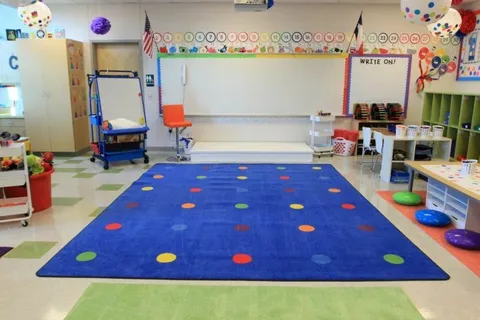
Patterns hide stains better than solid colors. In a shared room, patterns also add energy. Stripes, geometric shapes, or polka dots can make the floor the focal point. If the furniture is simple (like white bunk beds), a bold patterned rug brings the room to life. You can also use patterns to connect the beds. One large patterned rug that spans the space between beds creates a “common ground” for shared play.
Incorporating Education
Rugs can double as toys. Look for designs that feature roadways, world maps, or the alphabet. In a shared room, an interactive rug becomes a collaborative play station. It encourages siblings to play together on the floor rather than fighting over individual toys on their beds.
Safety and Maintenance Essentials
A rug is only good if it stays safe and clean.
Non-Slip is Non-Negotiable
In a room where kids run and jump, a slipping rug is a hazard. Always use a high-quality rug pad underneath. This keeps the rug in place and adds an extra layer of cushioning. Some rugs come with non-slip backing, but a separate pad usually works best.
Easy-to-Clean Materials
Assume the rug will face spills, markers, and mud. Check the cleaning instructions before you buy. Machine-washable options are great for younger kids. For larger area rugs, ensure the material can handle spot cleaning or professional steam cleaning.
Allergen Considerations
If one of your children has allergies, the rug type is critical. Low-pile rugs trap fewer allergens than shag rugs. Natural materials like wool are hypoallergenic and resist bacteria growth, making them a safer choice for sensitive kids.
Final Thoughts on Shared Spaces
Designing a shared room doesn’t have to be a headache. It is an opportunity to create a functional, stylish space that respects each child’s individuality. By choosing the right material and layout, you create zones for play and rest.
Whether you visit a local showroom or buy carpets online india offers a vast marketplace of textiles, look for quality and durability. A good rug withstands the chaos of childhood and provides a soft foundation for your kids to grow, play, and bond.
