


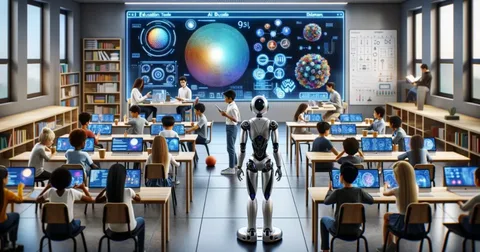
In today’s rapidly evolving world, the integration of technology in education has become essential. Among the most transformative advancements is Education AI, which is revolutionizing how students learn and educators teach. The role of Education AI in building tomorrow’s digital learners is crucial, as it prepares students for a future dominated by digital skills and lifelong learning.
Understanding Education AI
Education AI refers to artificial intelligence technologies applied to enhance the learning experience. From personalized learning platforms to intelligent tutoring systems, AI tools adapt to individual student needs, learning styles, and pace. Unlike traditional methods, Education AI ensures that every learner receives tailored guidance, making education more effective and inclusive.
Personalized Learning: A Key Benefit
One of the most significant contributions of Education AI is its ability to deliver personalized learning. AI algorithms analyze student performance in real-time, identifying strengths, weaknesses, and knowledge gaps. This enables the creation of custom learning paths that maximize student engagement and retention. By focusing on individual needs, AI helps students develop essential digital skills, critical thinking, and problem-solving abilities.
Empowering Educators
The role of Education AI is not limited to students alone. Educators also benefit from AI-driven insights that streamline administrative tasks, track student progress, and suggest targeted interventions. By reducing repetitive tasks, teachers can focus more on mentoring and guiding learners, fostering a more interactive and dynamic classroom environment.
Preparing Tomorrow’s Digital Learners
As technology continues to shape the future, students must be equipped with digital literacy, adaptability, and technological fluency. The role of Education AI in building tomorrow’s digital learners lies in its capacity to create immersive learning experiences, simulate real-world scenarios, and encourage collaboration across virtual platforms. Through AI, learners not only acquire knowledge but also develop the skills needed to thrive in a digital-first world.
Challenges and Considerations
Despite its immense potential, Education AI comes with challenges such as data privacy concerns, ethical considerations, and the digital divide. Stakeholders must ensure responsible AI integration, continuous teacher training, and equal access to technology. Addressing these concerns is essential for realizing the full potential of AI in education.
Conclusion
The integration of AI in education marks a new era in learning. By offering personalized learning experiences, empowering educators, and preparing students for the digital age, Education AI plays a pivotal role in building tomorrow’s digital learners. As we continue to embrace technological advancements, it is clear that AI will be an indispensable partner in shaping the future of education.
